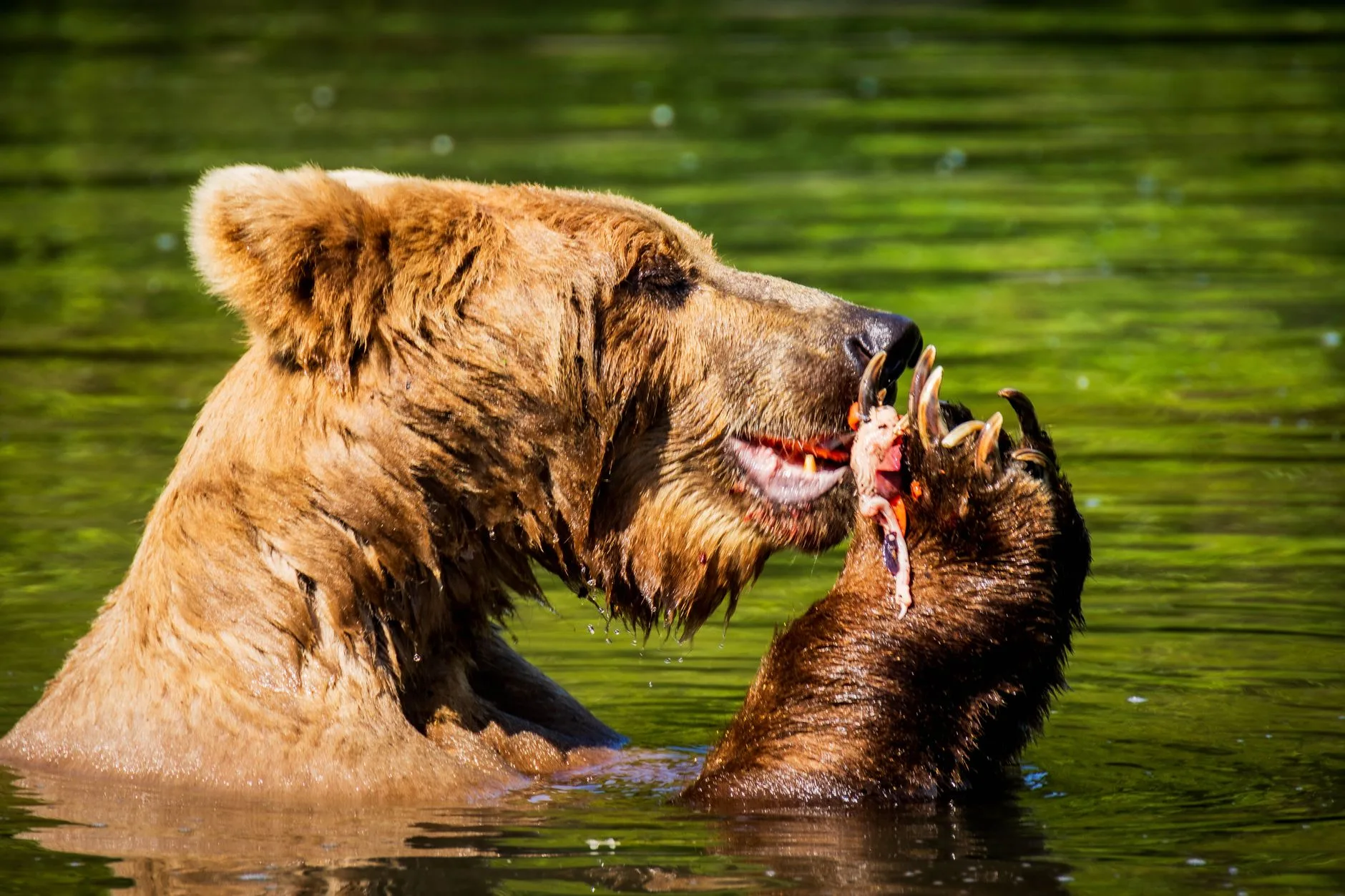
Most Montana bear hunters know the basics: cook your meat thoroughly, don’t eat it pink. But cases like the one in the video below are a gut-punch reminder that “thoroughly” means something very specific when it comes to black bear — and that confidence in your own cooking can land you in a hospital bed with parasites in your heart muscle.
What Is Trichinosis — and Why Is Bear Meat High Risk?
Trichinella is a parasitic roundworm that causes trichinosis, a foodborne illness that can range from flu-like symptoms to serious cardiac and neurological complications in severe cases. According to the CDC, wild game — particularly bear, mountain lion, and wild boar — is the primary source of trichinosis cases in the United States today. The CDC reports that roughly 16 cases are diagnosed annually in the U.S., and wild game consumption accounts for the majority of them.
Unlike deer or elk, black bears are true omnivores. They scavenge carcasses, eat rodents, and consume whatever the landscape offers — from huckleberries in a Flathead drainage to gut piles left in the breaks east of the Missouri River. That diet is exactly how Trichinella larvae enter the food chain. The larvae encyst in muscle tissue, which means they are present in the cuts hunters prize most: the backstraps, the roasts, the ribs slow-cooked over a fire at a family cabin. No amount of marinating, brining, or smoking at low temperatures will reliably kill them. Only heat will.
The USDA and CDC Recommendation Is Specific — and Non-Negotiable
The USDA Food Safety and Inspection Service is unambiguous: all wild game meat from high-risk species, including black bear, must reach an internal temperature of 160°F throughout the entire cut. Not surface temperature. Not “until the juices run clear.” Not a rough estimate based on how long it’s been on the grill. The thickest part of the meat, measured with a calibrated instant-read thermometer, must hit 160°F — and that thermometer should be in your pack before you’re in the field, not an afterthought at camp.
Bear fat renders and the outside of the meat chars long before the interior reaches a safe temperature. That’s not a beginner’s mistake — it’s a physics problem that catches experienced hunters off guard every season. A roast that looks and smells done at two hours may still be harboring live larvae at its core.
One more critical point: freezing bear meat does not reliably kill Trichinella. The strain common in North American black bears is freeze-resistant, unlike the strain found in domestic pork. The USDA’s freezing guidelines that apply to commercially raised pork do not apply to wild bear meat. Cooking to temperature is your only dependable defense.
Montana-Specific Context: Know the Risk in Your Hunting Area
Montana Fish, Wildlife & Parks lists black bear as a high-risk trichinosis species alongside mountain lion and wild pig. Montana’s spring bear season typically runs from mid-April through late May, with fall season running concurrently with general big game seasons from September into November, depending on the hunting district. Bears taken in timber-heavy country — the Yaak Valley, the Cabinet Mountains, the densely forested drainages of the Bitterroot and Blackfoot — may have had more opportunity to scavenge than bears in more open terrain, though no bear from any part of the state should be considered low-risk.
If you’re hunting on public land managed by the U.S. Forest Service or BLM — which covers the majority of Montana’s bear habitat — field care still falls entirely on you. Get the meat cooled quickly, keep it clean, and label and store it properly before transport. None of that replaces the thermometer step when it’s time to cook.
Practical Takeaways for Montana Bear Camp
- Buy a quality instant-read meat thermometer and keep it in your camp kit. A reliable model runs $20–$35 and is non-negotiable for bear meat.
- Cook all bear meat to 160°F internal temperature, measured at the thickest part of the cut, every time — including sausage, burger, and any ground product mixed from bear.
- Do not rely on color as a doneness indicator. Bear meat can appear fully cooked and still be unsafe.
- Do not assume freezing makes bear meat safe. It does not, for this species and this parasite strain.
- Share this information with whoever is cooking in camp — the risk doesn’t care whether the cook is an experienced hunter or a first-timer at the stove.
- If you develop muscle pain, swelling around the eyes, fever, or gastrointestinal symptoms within one to four weeks of eating bear meat, tell your doctor what you ate. Early treatment with antiparasitic medication is significantly more effective than late diagnosis.
Montana’s bear hunting tradition — from the spring seasons in the river breaks to the fall hunts deep in the Cabinet wilderness — is worth doing right. That means shot placement, ethical field care, and knowing exactly what temperature your meat needs to reach before it hits the table. The parasite risk is real, it’s documented, and it’s entirely preventable with one inexpensive tool and a few minutes of patience at the fire.
For more information, consult the CDC trichinellosis resource page, the USDA Trichinella guidance for wild game, and Montana FWP for current season regulations and hunting district information.
Montana's outdoor week, in your inbox at 7am Friday.