
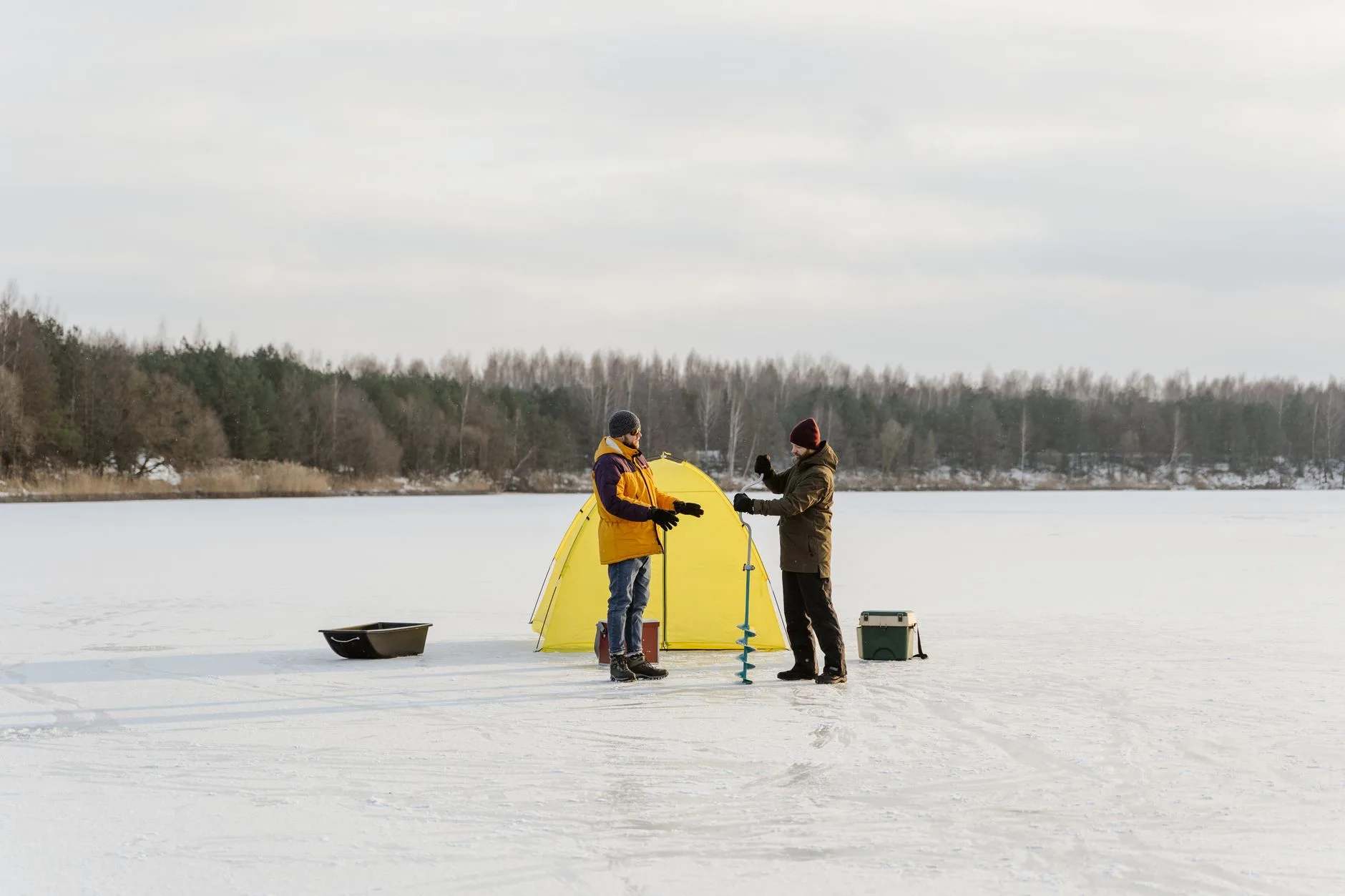
First ice doesn’t wait for you to get ready. Across eastern Montana’s high plains, November has locked in with that familiar cold, grey stillness — the kind that turns reservoir surfaces to glass overnight and sends every serious walleye angler into planning mode. Fort Peck, Fresno, Nelson, Medicine Lake — same watchlist as every fall, same question hanging over all of it: when is it safe to walk out? Get it right and you’re into some of the fastest walleye action of the year. Get it wrong and you’re swimming — or worse.
Why Early Ice Is the Best Walleye Bite of the Year
Early ice fishing on eastern Montana reservoirs is genuinely elite — and it’s brief. When a reservoir first locks up, walleye are still carrying that aggressive pre-winter feeding behavior from late fall. They haven’t had weeks of pressure through the ice yet. They haven’t settled into the deep, slow grind of mid-January. That first week or two, fish are often shallow, active, and willing to eat. On a body of water the size of Fort Peck — Montana’s largest reservoir at over 130 miles long — that means fish that have been roaming main-lake structure all fall are now compressed and catchable, often in water shallow enough to reach with a short-stick jig setup right off the bank or a short walk from the ice edge.
The trade-off is that early ice is the most dangerous ice of the year. In Montana, where temperatures swing hard and wind scour can thin a shelf overnight, that danger is real and inconsistent across a single reservoir’s surface. Don’t let the excitement rush your judgment.
Where Ice Forms First — and Why It Matters
Not all Montana reservoirs freeze at the same rate, and even within a single body of water, ice thickness varies wildly. On Fort Peck, sheltered bays and the upper arms near the Missouri River inflows — areas around the Pines Recreation Area on the south side and the Horse Creek arm on the north — tend to lock up before the main lake body. Wind-exposed main-lake points can lag by days or more than a week. Fresno Reservoir near Havre, smaller and shallower than Fort Peck, often freezes faster and more uniformly. Nelson Reservoir south of Malta is another early-ice destination, again because of its relatively shallow basin and limited surface area to resist a hard cold snap.
Medicine Lake, tucked into the northeast corner of the state, sits at lower elevation and can be among the first to offer drivable ice in a hard cold year. If you’re willing to make the drive from Plentywood or Culbertson, keep it on your radar.
How to Read Ice Before You Commit
Clear, solid blue-black ice is the strongest ice you’ll find. That’s the general rule passed down among experienced ice anglers, and it holds. Newer ice needs to be thoroughly tested before you trust it with body weight, let alone a sled or ATV. Ice formed over moving water or near inlet channels weakens from below and can look identical to solid shelf ice from a distance. That’s the kind of thing that gets people killed.
Here’s how to approach early ice responsibly:
- Chip and check constantly. Carry an ice chisel or auger and test thickness every few steps when you’re venturing out for the first time at any new location. One good reading doesn’t cover the whole bay.
- Watch for pressure cracks and dark patches. Dark ice near inlets or current points can be dangerously thin even when surrounding ice looks solid. Go early in the morning — November afternoon sun and warming temps can soften early ice significantly by midday, so first light is your safest window. And if you’re out with someone, don’t walk side-by-side on early ice. Spread the weight.
Wear a float suit or carry ice picks. Honestly, this isn’t a preference — self-rescue from an ice break is nearly impossible without them. Non-negotiable on early ice.
What to Target and How to Fish It
Early-ice walleye on eastern Montana reservoirs respond well to a straightforward approach. A blade bait worked aggressively through the water column — ripped up, allowed to flutter down — has produced fish consistently at this time of year when walleye are still in a feeding mood. Jigging spoons tipped with a minnow head are another go-to. Keep your jigging cadence active early in the session. If the bite slows, scale down your presentation before you give up on your location.
On Fort Peck specifically, rocky main-lake points that transition into softer bottom have been productive walleye structure throughout late fall from the boat. Those same transitions — particularly in the Missouri arm and the areas surrounding the dam tailrace — are worth drilling over on early ice. Walleye will stack along those edges before moving shallower as ice thickens and light penetration drops.
Before You Go: Regulations and Conditions
Ice fishing seasons and possession limits on Montana reservoirs can vary, and rules do change. Confirm current walleye regulations for your specific reservoir directly with Montana Fish, Wildlife & Parks before your trip — the FWP website is a start, but a quick call to the Glasgow or Havre regional offices will get you the most current picture on Fort Peck or Fresno.
For real-time ice conditions, local bait shops in Glasgow, Wolf Point, Malta, and Havre are your best resource. These are the people getting daily reports from the water. No app or forecast replaces someone who drove out to the reservoir yesterday morning and chipped a hole. In my experience, five minutes on the phone with the right bait shop will tell you more than an hour of scrolling fishing forums.
The window from first safe ice to the kind of ice that handles a crowd is short — sometimes just a couple of weeks before pressure and traffic change the whole dynamic. If the conditions line up, don’t wait around. Eastern Montana’s reservoirs won’t hold that bite forever.
Montana's outdoor week, in your inbox at 7am Friday.