
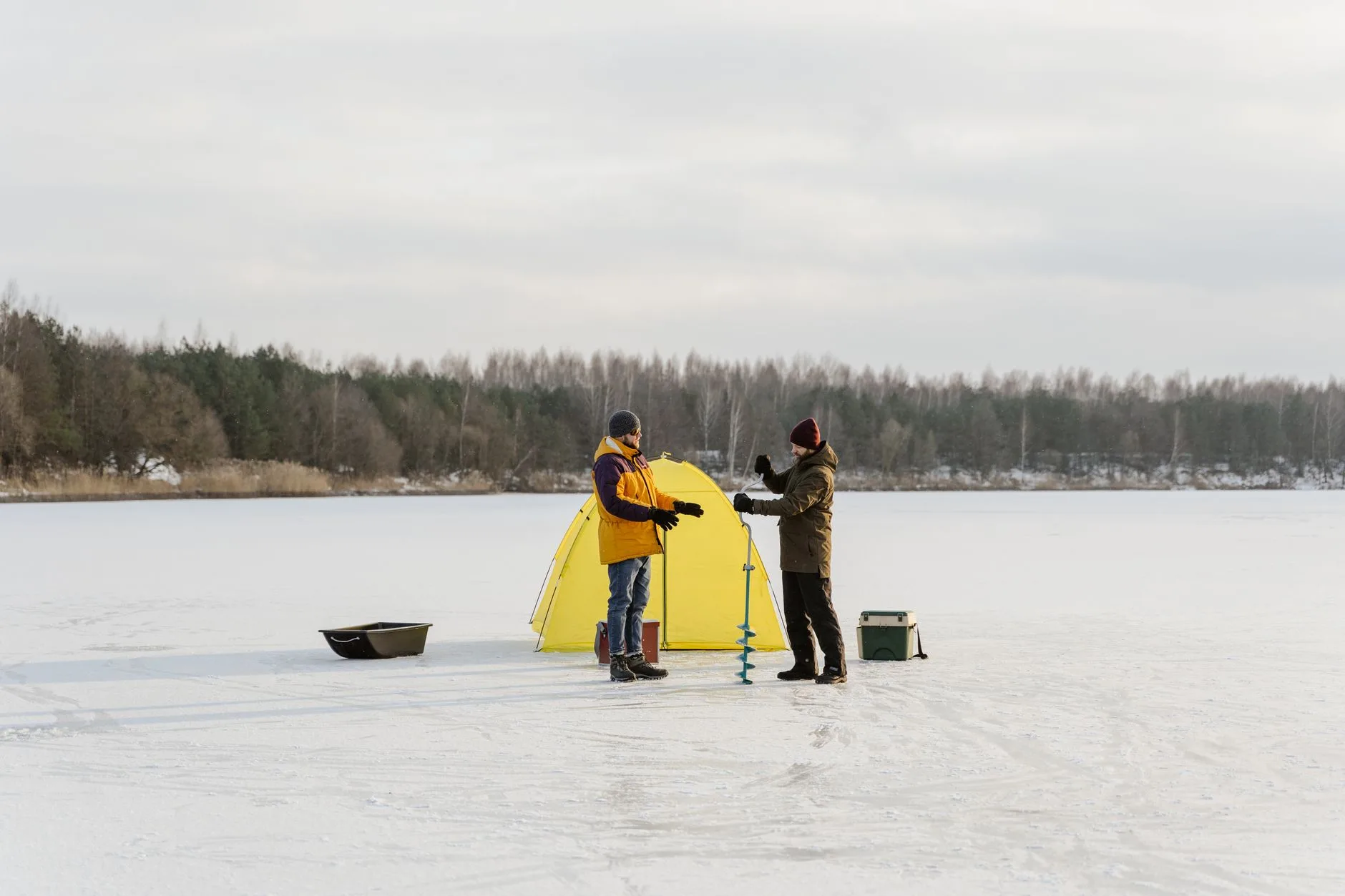
First ice on Fort Peck’s upper arms hits differently than anything else in Montana fishing. If you’re in eastern Montana right now and you fish walleye, you’re already watching the forecast, checking overnight lows, and doing the math. The question isn’t if you’re going ice fishing — it’s whether you’ll be ready when the window opens. And it opens sooner than most anglers outside the Hi-Line realize.
Why Eastern Montana Freezes First
Geography and elevation drive everything here. The high country along the Rocky Mountain Front can get brutal early, but it’s the wide, shallow, wind-swept reservoirs of the Hi-Line and eastern Montana that typically lock up first. These impoundments sit at lower elevations, have relatively modest depth profiles across large portions of their surface area, and lack the thermal mass that keeps deeper western-slope reservoirs open well into winter.
Cold Arctic air masses push down from Canada with nothing to stop them once they clear the Bears Paw and Little Rockies. When those systems park over north-central and northeastern Montana in late October and early November — as they’ve already started doing this year — the shallower bays on these big reservoirs begin to skin over fast. We’re not talking a gradual cool-down. We’re talking ice.
Tiber Reservoir: Montana’s Early Ice Leader
Tiber Reservoir near Chester on the Marias River drainage is consistently one of the first significant Montana fisheries to develop safe ice. Sitting at roughly 3,000 feet on the windswept Hi-Line, Tiber’s broad shallow flats in the upper arms cool quickly once overnight lows drop and stay below freezing. In years with a strong early-November cold snap, portions of Tiber’s upper reaches can develop fishable ice — generally considered four inches minimum for foot travel — before the middle of November.
The draw at Tiber isn’t complicated: yellow perch. The reservoir holds a strong perch population, and early-ice perch fishing there can be genuinely exceptional. Fish tend to stack in mid-depth basin areas and around submerged structure. Small tungsten jigs tipped with a waxworm or perch eye, dropped into the fifteen-to-twenty foot range, will start producing as soon as the ice is safe. Confirm current species limits and regulations with Montana FWP before you head out — Tiber’s rules have seen adjustments in recent seasons and you want current information, not last year’s memory.
Fort Peck: Big Water, Longer Wait — But Worth It
Fort Peck Reservoir is a different animal entirely. At nearly 250,000 surface acres, it’s one of the largest reservoirs in the country, and its sheer volume of water means it holds heat longer than smaller impoundments. The main basin rarely develops safe ice until well into December in most years. That’s not the whole picture, though.
The upper arms — particularly the Missouri River arm above the Highway 24 bridge and the Dry Arm — are shallower and more protected from wind fetch. These upper reaches can develop ice significantly ahead of the main reservoir. Anglers who know Fort Peck watch those upper arms closely in November, because when they ice up, the walleye fishing can be outstanding. Early-winter walleye in those arms tend to concentrate where shallow flats drop into deeper channel edges. Classic early-ice structure, and Fort Peck has it in spades.
Tip-ups rigged with live or fresh-dead shiners over those channel drop-offs have historically been a productive approach. Jigging with blade baits and swimming jigs also works well in the clearer cold water. Verify current Fort Peck walleye regulations directly with Montana FWP Region 6 — slot limits and possession rules apply and need to be confirmed for the current season.
Other Waters to Watch Right Now
Tiber and Fort Peck get most of the attention, but they’re not the only game in northeastern Montana. Nelson Reservoir near Malta is smaller and shallower, which means it can develop safe ice early in the season — sometimes ahead of Tiber — and it holds a solid perch population that sees far less pressure than the big-name waters. Honestly, if you want a quiet early-ice outing without a crowd, Nelson is worth the drive.
Fresno Reservoir near Havre on the Milk River drainage shares similar characteristics with Tiber — broad, relatively shallow, full Hi-Line exposure — and tends to ice on a comparable timeline. Access to Tiber itself runs off Highway 2 near Chester and via the dam road off Highway 410, both of which provide reasonable early-season access once roads allow.
How to Monitor Conditions Right Now
Don’t guess — check. Water temperatures from USGS monitoring stations on the Marias and Milk rivers give you a solid proxy for reservoir cooling trends. When river temps feeding these impoundments drop into the mid-to-upper thirties, ice formation on the shallower bays isn’t far behind. Local bait and tackle shops in Chester, Havre, Glasgow, and Malta are your best real-time intelligence, though. These folks know their home water and they’ll tell you straight whether ice is forming. In my experience, a five-minute phone call to a Chester bait shop in early November is worth more than an hour of staring at weather apps.
Montana FWP’s regional offices can also provide current conditions information, and the FWP website carries ice fishing safety guidelines worth reviewing before every early-season outing.
Safe Ice Is the Only Ice Worth Fishing
Early-season ice is the most dangerous ice of the year — it forms unevenly, hides pressure cracks, and can vary dramatically in thickness across just a few yards. Four inches of clear, hard ice for foot travel is the standard minimum — but even that’s a floor, not a guarantee. Carry ice picks around your neck, fish with a partner, and drill test holes as you move. The walleye will still be there if you take an extra ten minutes to make sure the ice will hold you. They won’t do you much good from the bottom of the Dry Arm.
Montana's outdoor week, in your inbox at 7am Friday.