
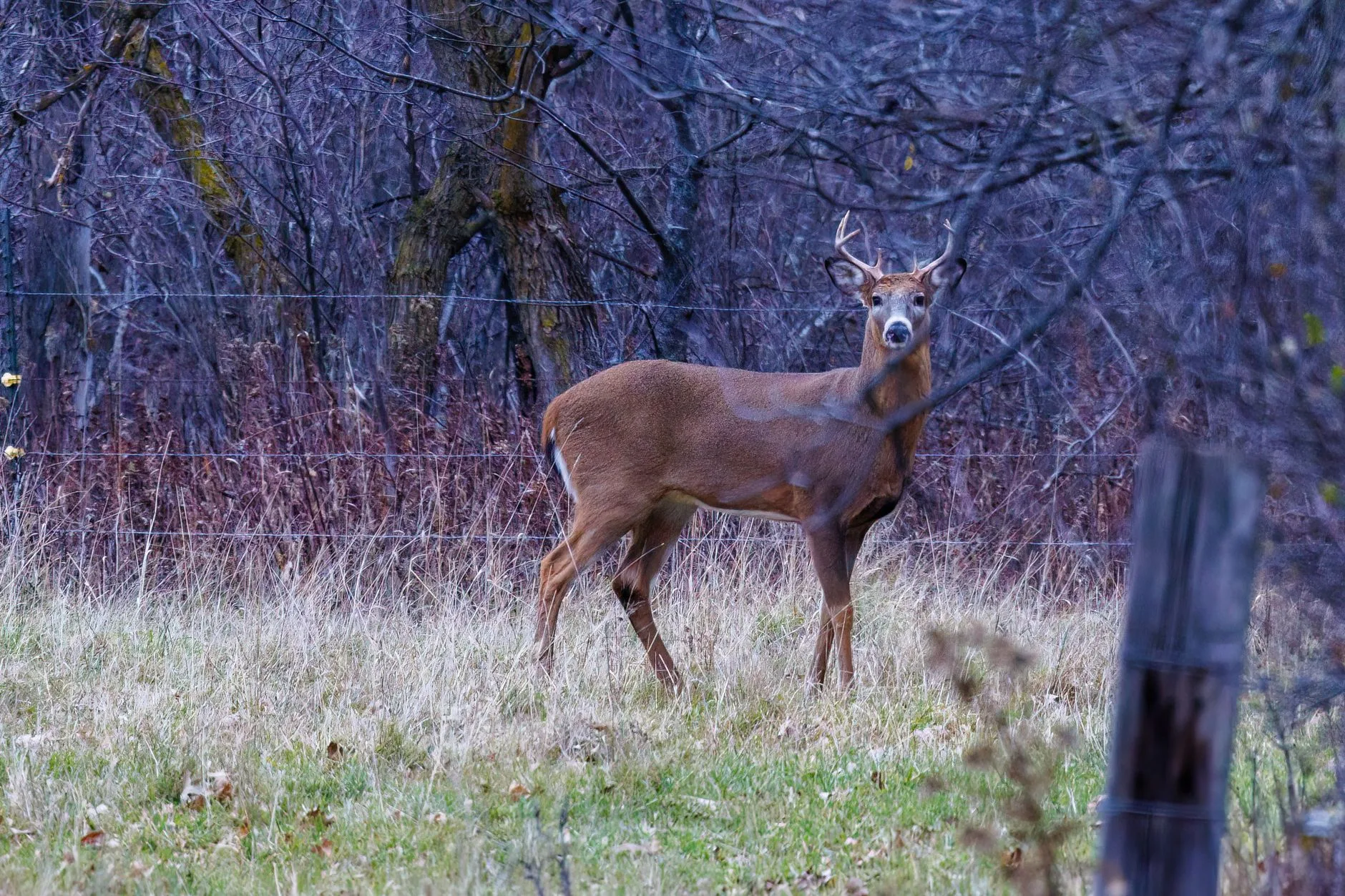
Early November whitetail hunting in eastern Montana isn’t complicated — it’s just a matter of being in the right place while every mature buck in the county has lost his mind. The seeking and chasing phase is on. Bucks that spent all of October moving like ghosts after midnight are now burning daylight, covering miles of broken prairie and creek timber before most hunters have finished their second cup of coffee. That’s your window. Don’t waste it.
Why This Week Is Different
Eastern Montana whitetails run on the same photoperiod-driven clock as whitetails across the northern plains. The seeking phase — when bucks start actively hunting does that haven’t yet entered full estrus — hits its stride in the first week of November. Chasing behavior ramps up right behind it. We’re talking about deer that covered a quarter-mile after dark all October now burning through CRP and creek bottom in broad daylight, sometimes covering miles in a single morning.
In the Missouri River Breaks, the Milk River corridor, and the drainages threading through the Powder River Basin, that movement is happening right now. Hunters in HD 700 and HD 500 have access to some of the best public-land whitetail hunting in the country this week. The bucks are moving. The only real question is whether you’re in the right spot when they do.
Where to Be: Public Land Setups That Produce
Creek Bottoms and Coulee Corridors
The cottonwood-choked draws off the Tongue River, the brushy coulees feeding into the Yellowstone near Glendive, the box elder tangles along Redwater Creek — these are buck highways during the rut. Does bed in this cover, and bucks know it. During the seeking phase, a mature buck will work a creek bottom like a pointer on birds, nose down, checking every bend and backwater.
Set up at the intersection of two drainages, or where a coulee pinches down before opening into a wider bottom. These funnels concentrate movement in a way that’s hard to replicate anywhere else on the landscape. On BLM ground in the Missouri Breaks, look specifically for spots where public land abuts private ag — bucks cross those boundaries constantly during the rut and don’t care who owns what when they’re locked onto a doe.
CRP Edges
CRP fields are doe magnets in eastern Montana, which means right now they’re buck magnets too. The edge where standing CRP grass meets harvested cropland or grazed pasture is a natural travel lane, and bucks cruise these edges in the morning, scent-checking as they go. The most productive public setups are where a CRP block backs up against a creek draw — you’ve got doe bedding and a travel corridor in one spot.
Glass these edges hard at first and last light. During full chasing phase, you may see bucks crossing open ground at 10 in the morning just as readily as at dawn. Don’t leave your stand for lunch this week. Honestly, that midday walk back to the truck has cost more hunters a buck than any other single decision in November.
Prairie Breaks and Rim Country
Between Miles City and Jordan, a lot of hunters underestimate how much whitetail country exists in the broken rim terrain above the river valleys. Bucks use these rugged fingers of badlands the same way mule deer do — bedding in the rough stuff, cruising the benches. During the rut, a whitetail buck will work the base of a rimrock section, scent-checking the flats below, then drop into the bottom to investigate anything that smells interesting.
Set up where a broken finger of terrain meets the river-bottom timber. These edge transitions concentrate both species of deer and the bucks chasing them. In my experience, that specific transition — badlands edge to cottonwood bottom — produces more midday rut sightings than any other terrain feature out here.
Rifle Season Tactics for Rut Bucks
Rut-crazed bucks move fast and erratically, and your shot opportunity might last three seconds or thirty. Know your distance before you need it, control your breathing, and don’t rush the trigger. Wounded bucks during the rut are notoriously hard to recover — they don’t pile up the way a calm deer does. Take the shot you’ve earned, not the one you’re hoping for.
Eastern Montana’s open terrain is fundamentally a glassing game. Sit on a high point in the first two hours of morning and cover ground with your binoculars. You can spot a cruising buck from a mile out in this country and plan an intercept before he ever knows you exist. That’s the rifle advantage — use it.
- Wind discipline still matters. Rut behavior makes bucks careless, but they still have their nose. The prevailing wind out here runs west to northwest most days. Set up so thermals and wind carry your scent away from likely approach routes. A rutting buck is distracted, not stupid.
- Rattling and grunting work. In the breaks and creek bottoms, a short rattling sequence followed by a buck grunt can pull in a cruising deer looking for a fight. Keep sequences short — a minute at most — and wait at least 30 minutes between attempts. Don’t overwork it.
And stay on stand. Chasing phase produces midday movement in a way that nothing else in the deer season does. If you’ve got sign and a solid setup, there’s no good reason to be walking back to your truck at 9:30.
A Note on Regulations and Access
Confirm your specific tag, season dates, and any district restrictions directly with Montana FWP before you head out. HD boundaries in eastern Montana can be irregular, and public land access in the breaks requires knowing your corners cold. The onX Hunt app earns its subscription fee out here — verify BLM and state land boundaries before you cross a fence. Trespassing accusations during rifle season in eastern Montana are serious, they’re avoidable, and they’re not worth it.
The rut doesn’t hand out extensions. Get in the field before first light, stay as long as you can hold out, and trust that the biology is working in your favor this week in a way it won’t be again until next November.
Montana's outdoor week, in your inbox at 7am Friday.