
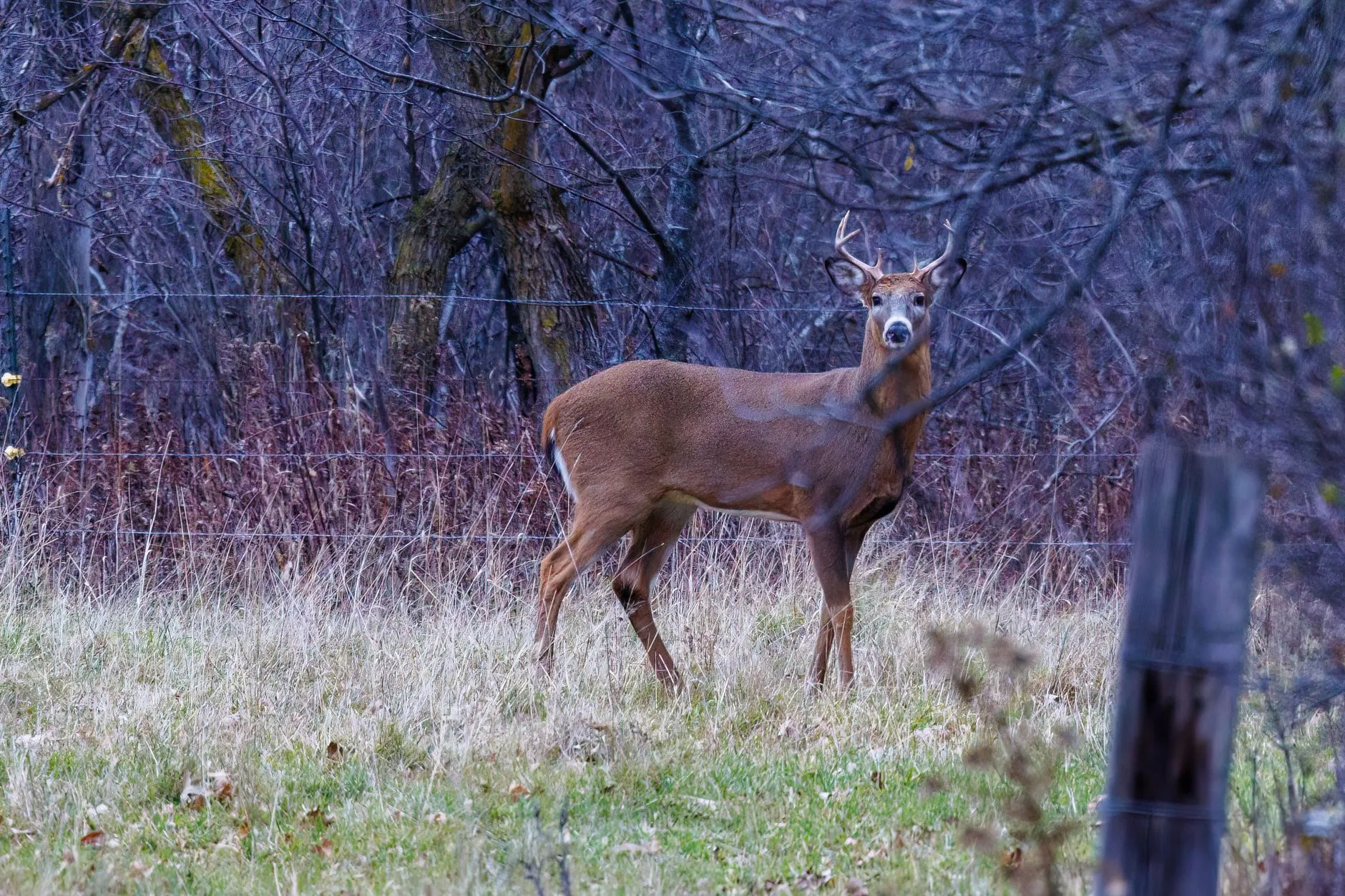
If you’re holding a whitetail rifle tag in one of Montana’s 700-series hunting districts and you’re not in the field this week, you’re missing the best window of the entire season. November 1st is not an arbitrary date on the calendar — it’s the tipping point when whitetail bucks in eastern Montana shift out of their summer-to-early-fall patterns and enter the seeking phase of the rut in earnest. Daylight movement increases dramatically. Mature bucks that spent October operating almost entirely after dark start covering ground all morning, pushing through river bottoms and coulees with their noses down and their guard down. Your rifle tag just became significantly more valuable than it was seven days ago. That said, elevation and latitude variation across the 700-series footprint — combined with annual weather differences — can shift observable seeking behavior by several days in either direction, so use fresh sign on the ground to confirm timing rather than relying on the date alone.
Understanding What’s Happening Right Now
The whitetail rut in eastern Montana doesn’t follow a single dramatic moment — it unfolds in phases, and the seeking phase is arguably the most huntable. Bucks are checking scrapes, working rubs, and cruising doe family groups without yet being locked onto a single female. That means they’re covering ground. A buck that lived in a half-mile stretch of the Yellowstone River timber all of October might travel several miles of river bottom in a single morning right now. On the high plains east of Miles City or in the breaks country north of Glendive, that translates to bucks showing up in places you wouldn’t expect — crossing open prairie between creek drainages, cutting through fence lines mid-morning, appearing at the edge of a CRP field in full daylight.
The chasing phase — when bucks are physically pursuing does — typically follows within days and will push movement even harder. But the seeking phase is actually more predictable, because bucks are still traveling known terrain. They haven’t abandoned their home range yet. Hunt sign and funnels now, and you’ll intercept deer that are still operating in a pattern you can read.
Reading Sign in Eastern Montana Terrain
The river systems are your primary focus — the Yellowstone, the Powder, the Tongue, the Missouri breaks country, and the Milk River corridor all hold concentrated whitetail populations tied to woody draws, cottonwood bottoms, and brushy coulees. This habitat creates natural travel corridors, and right now bucks are using those corridors to move between doe groups.
Look for three things in combination: fresh rubs on trees with diameter the size of your wrist or larger (a sign of a mature buck), active scrapes on bare dirt with a broken licking branch overhead, and tracks showing a wide, splayed toe with a dragging gait. Find all three in the same area and you’ve located a buck’s core travel route. In the breaks country, pay special attention to ridge fingers that drop into creek bottoms — bucks will work the lip of those ridges like a highway, scent-checking the draws below without fully committing until they’re ready to drop down.
Stand Placement on Public Land
Public land in the 700-series districts — units across Custer, Fallon, Prairie, Wibaux, Dawson, and surrounding counties — often gets overlooked by hunters who assume the pressure is too high or the access too complicated. The reality is that most hunting pressure concentrates within a short walk of road access. Get a mile or more from a two-track, and you’ll find undisturbed sign and less-educated deer.
For stand placement this week, prioritize pinch points over destination locations. A food source or water hole is less relevant now — bucks are focused on does, not calories. Find where thick cover narrows between two open areas, where a creek crossing is the only practical path through dense brush, or where a ridge saddle funnels deer between drainages. Set up on the downwind side of these pinch points and be patient. A portable hang-on stand or a well-positioned ground blind in a willow thicket can put you within ethical rifle range without skylined silhouette issues that a ridge setup creates.
Even a rutting whitetail buck will hang up and disappear if he winds you. Eastern Montana’s prairie winds are predictable in direction but not in gusts — check the forecast the night before, and don’t be afraid to pull a stand location and move to a secondary setup if the wind shifts. A wrong-wind morning is a wasted morning, and at this point in November, you don’t have mornings to waste.
Calling and Rattling from the Rifle
Rattling antlers and grunt calls work in eastern Montana during the rut, full stop. Bucks in the seeking phase are aggressive and will respond to the sound of competition. Keep your calling sequences short and aggressive — a minute of rattling, followed by silence, followed by a few grunts. Give a responding buck ten to fifteen minutes before moving or calling again. In open country, a buck might hang at distance to survey the situation before committing. That’s fine — you have a rifle. Know your maximum ethical range before you sit down, and don’t let the excitement of a responding buck push that limit.
A Few Final Reminders Before You Head Out
- Confirm your specific district regulations with Montana FWP before hunting — antler restrictions, access rules, and legal shooting hours vary and change. Don’t rely on last year’s memory.
- Glass before you move. Eastern Montana’s open terrain is an asset — use optics to find bucks before you burn your approach.
- Hunt all day. Mid-day movement during the seeking and chasing phases is real. Pack food, stay warm, and don’t head back to the truck at 10 a.m.
- Pay attention to wind. Scent control and wind direction can save you from blowing out the exact deer you came to hunt.
The eastern Montana whitetail rut doesn’t wait. This week is your opportunity — make the most of it.
Montana's outdoor week, in your inbox at 7am Friday.