
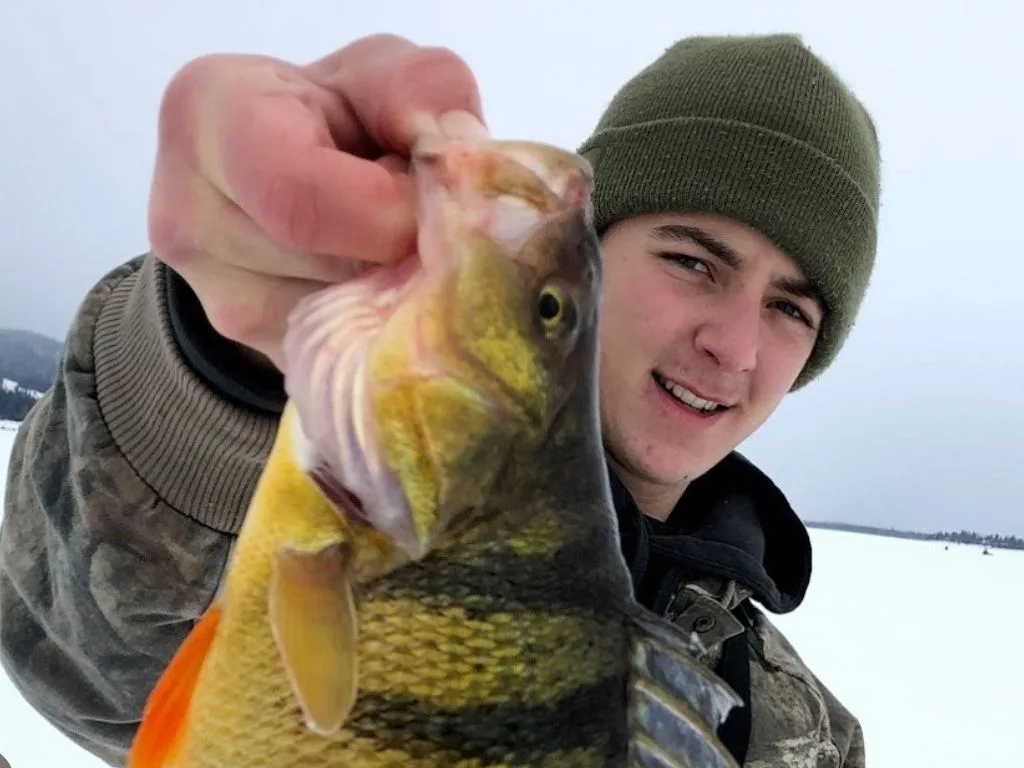
The chatter around Idaho’s Lake Cascade’s missing 2-pound perch has been loud lately, but one longtime angler (Idaho Master Angler) who has been fishing the lake since 2013 and does not claim to be an expert, isn’t ready to hit the panic button just yet. While some are pushing for a 14-inch slot limit, he’s not opposed in principle… he’s just not convinced the sky is falling. From what he’s seeing, the lake is packed with 10–12 inch fish this year — maybe more than in seasons past. To him, that doesn’t scream collapse. It looks like a reset. After all, biologists have long said that angler harvest plays a relatively small role in jumbo declines, and history shows Cascade’s biggest perch are basically senior citizens in fish years. A similar dip happened in 2020, and it lined up with age-class data. Perch populations, like most fisheries, tend to move in waves — and sometimes you’re in the trough before the next crest.
Of course, not everyone agrees. Some anglers argue the surge in fishing pressure since COVID has absolutely taken its toll, pointing to packed ice seasons and social media-fueled crowds. Others believe slot limits and reduced daily limits are the only way to protect future giants, while a few Midwest transplants say they’ve seen this exact cycle before — four to five years from a strong year class to true jumbos, then a lull before the next boom. There’s a debate over whether it’s pressure, predation, natural aging, or simply patience that’s needed. Some warn that losing the smaller year classes would be the real red flag. Others shrug and say to enjoy it while you can.
So what’s the real story — natural cycle or too many buckets heading off the ice? And closer to home, do Montana anglers feel like they’re seeing the same patterns in our own perch fisheries?