
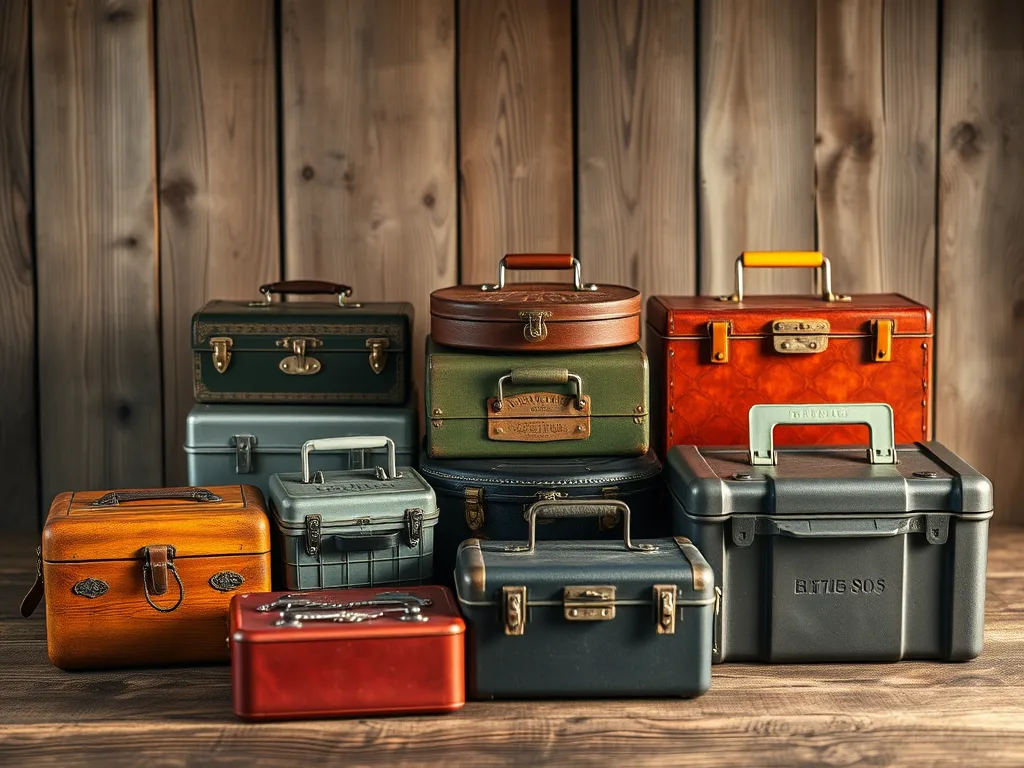
Back in the day, tackle boxes weren’t plastic trays with 47 compartments — they were leather or wood, and they had some serious character. According to a blog about fishing history, in the late 1800s and early 1900s, companies like Tronicks of Wisconsin were cranking out beautiful wooden boxes, while Richard Wheatley in Great Britain was shipping leather ones across the pond. Brands like Knickerbocker and Excelsior made fancy leather versions too — but they weren’t cheap. Truth is, early anglers didn’t need (or couldn’t afford) piles of gear, so those old 19th-century boxes are pretty rare today. Meanwhile, local carpenters and tanners often built custom boxes, and some of those homemade “folk art” pieces are absolute gems when they surface.

By the late 1800s, metal tackle boxes muscled in and took over — affordable, durable, and made by the millions. Companies like Geuder & Paeschke (Cream City), Stratton & Terstegge, Kennedy, and others blurred the line between toolboxes and tackle boxes for decades. Then came the 1930s plastic experiments — small, fragile fly boxes — but plastic didn’t truly explode until after World War II, when companies like Plano, UMCO, PAL, and Falls City rode the postwar fishing boom. From aluminum classics to the bass-fishing “possum belly” era and the legendary Plano 747, tackle boxes evolved right alongside American fishing culture. By the ’70s and ’80s, lightweight plastic boxes were everywhere — in boats, garages, and even craft rooms — proving the humble tackle box had officially become an icon.
What kind of tackle box do you use?