
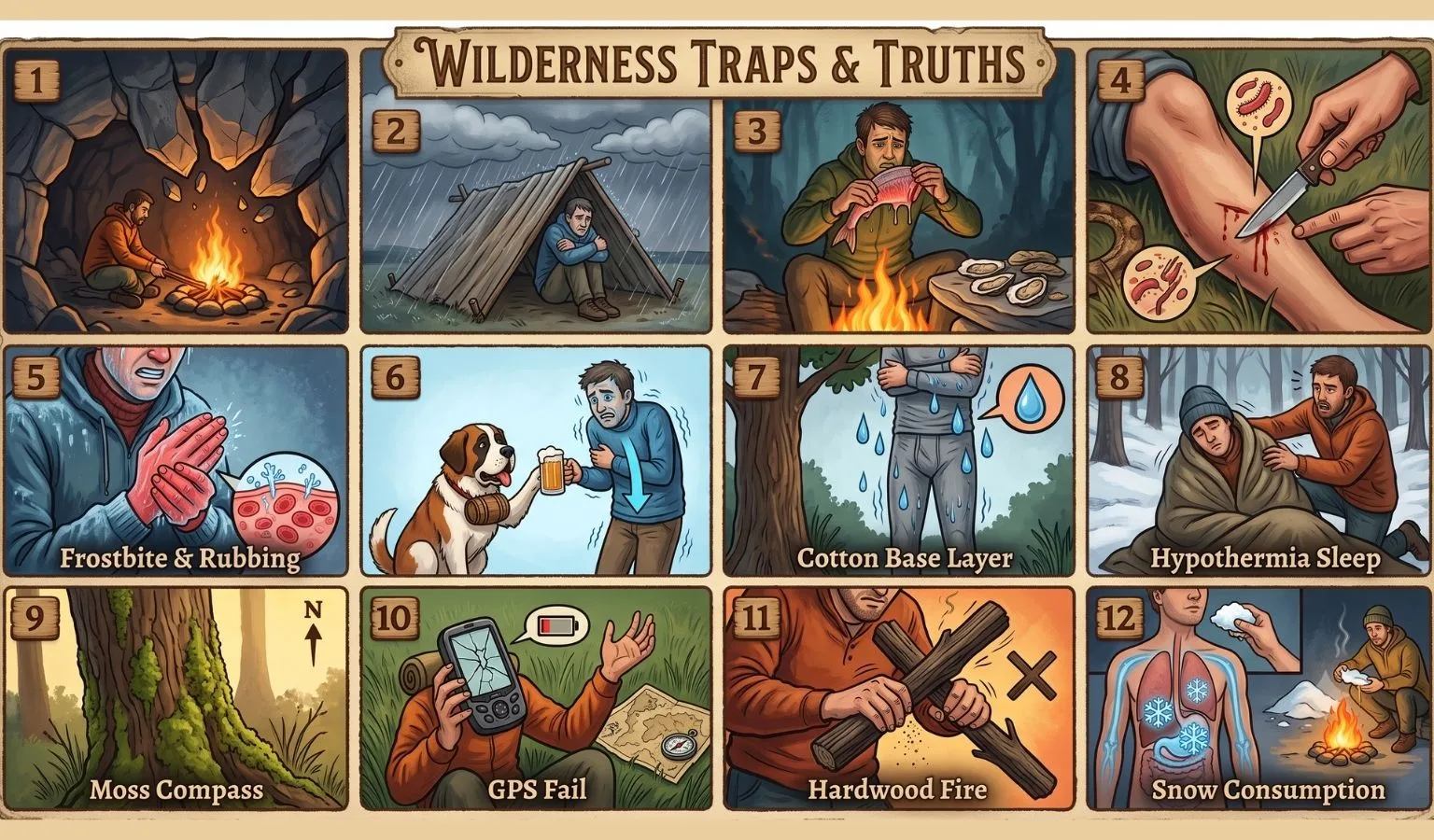
While a ton of outdoor experts completely agree with blowing up these dangerous old tropes, plenty of casual campers still argue that a few of these methods work just fine in a pinch. The data, however, overwhelmingly sides with the science: relying on movie logic in the wild is a quick way to get into serious trouble.
Tim MacWelch recently posted an article about debunking 26 common survival myths via Outdoor Life, and we are sharing some here:
Shelter & Wildlife Traps
- Turning caves into ovens: Lighting a bonfire inside a cave expands the rock overhead. Congratulations, you just engineered your own cave-in.
- Living in a lean-to: They look cinematic on TV, but they are glorified carports. You need four walls and a small door to keep the warmth in.
- Treating the woods like a raw sushi bar: Safe saltwater fish aside, eating raw wilderness critters introduces you to a nasty world of parasites and pathogens. Cook it.
- Sucking out snake venom: Cutting a bite and sucking it just adds mouth bacteria to a deeper wound. Use a pressure dressing and call a medic.
Cold Weather Blunders
- Massaging frostbite: Frostbitten tissue is full of tiny ice crystals. Rubbing it literally shreds your cells from the inside out.
- Liquid courage (booze) for warmth: Alcohol dilates your blood vessels, making you feel warm while rapidly dumping your actual core body temperature.
- Assuming all base layers are equal: Cotton is a sponge that holds water up to 27 times its weight. In the cold, cotton kills. Stick to wool or synthetics.
- Letting them sleep it off: When a freezing person gets drowsy, sleep can easily slide into death. Keep them awake.
Navigation & Fire Fails
- Using moss as a compass: Moss grows wherever it’s damp and shaded, not just the north. In many places, it actually prefers the sunny south.
- Blindly trusting the GPS: Batteries die and tech breaks. If you don’t have a paper map and a compass as a backup, you’re stranded.
- Using oak and hardwoods for friction fire: Hardwoods are terrible for creating the initial friction spark. You want non-resinous softwoods like cedar or willow.
Hydration Mistakes
- Drinking your own urine: If you’re desperate enough to try it, you’re already dehydrated, meaning your pee is highly concentrated toxic waste.
- Eating snow for water: Snow is 90% cold air. Eating it drops your core temperature instantly, fast-tracking you to hypothermia. Melt it first.
What do you think? Have you ever fallen for or used any of these, or do you think some of these old-school tactics still deserve a place in an emergency kit?
You can check out all of MacWelch’s myths here.
Topics
Survival
Montana Outdoor Weekly Pulse
Montana's outdoor week, in your inbox at 7am Friday.