
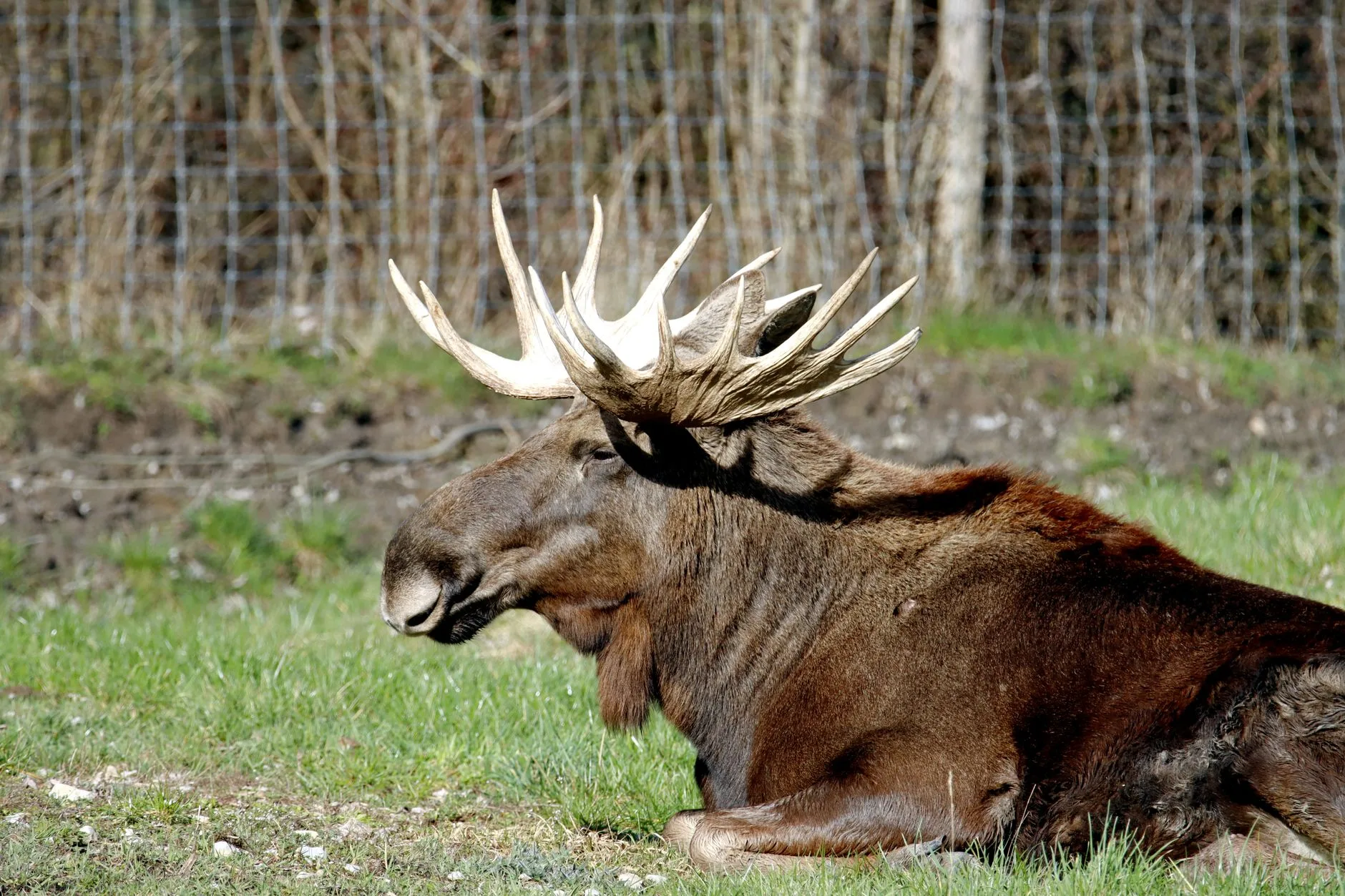
A thousand-pound bull moose stuck in a concrete skate bowl is not something Montana Fish, Wildlife & Parks trains for every Tuesday morning. But here we are. And honestly, the surprise isn’t that it happened — it’s that it doesn’t happen more often.
The recent rescue outside of a Montana skate park required tranquilization and a full coordinated extraction just to get one animal back on its feet and pointed toward the tree line. The moose hadn’t been clipped by a truck or run into town by a pack of wolves. It just wandered into terrain it couldn’t back out of — smooth concrete walls, no purchase, no exit. A powerful animal completely undone by geometry. That scenario should tell us something about where we’re headed as Montana towns keep sprawling into the creek bottoms and willow flats these animals have used for centuries.
Why Moose End Up Where They Shouldn’t
Moose aren’t stupid, but they’re also not careful the way elk are. Elk tend to stick to established migration corridors with some predictability — you learn their routes, you respect them, everybody gets along. Moose will thread through a subdivision, cut across a municipal park, or wade a drainage ditch behind a strip mall if it gets them to water or browse. They’re opportunistic navigators, and that opportunism gets them into trouble.
Spring is bad for this. Bulls pushing to establish territory will move through country they’ve never seen before. Fall is worse in some ways — a rutting bull tracking a cow doesn’t stop to evaluate whether the path he’s on dead-ends at a skate park. He just goes.
The real trap is vertical walls. A moose can step down into a drainage ditch, a stock pond, or a concrete bowl without much effort. Getting back out is a different problem entirely. Their bulk and leg structure make them lousy climbers, and smooth concrete gives them nothing to work with. Once they’re in and the panic sets in, you’ve got a dangerous animal in an impossible spot.
What This Means for Montana Towns and Rural Properties
If you’re living near riparian corridors, willow thickets, or timbered edges — and in western and central Montana, that’s most of us — you’re in moose country whether you see them regularly or not. That means your property and your habits matter.
Fencing near known moose travel routes needs some thought. Barbed wire at chest height is a serious hazard for an animal that prefers to push through rather than jump. Anything with a vertical wall — stock tanks, decorative ponds, excavations, roadside ditches — can become a death trap. A few rough-cut timbers or stacked rock along one edge can give an animal enough traction to haul itself out. Small thing, real consequence.
- Keep dogs leashed near moose habitat. In my experience, more moose-human conflicts start with an off-leash dog than any other single factor. A moose that feels pursued will go places it otherwise wouldn’t — into traffic, into yards, into dead-ends with no exit strategy.
- Give them an exit. If a moose is on your property, resist the urge to get closer, shoo it off, or let the dogs out. Open a gate, back off, and let it find its own way out. Pressure creates bad decisions — for the moose and for you.
Respect the Calm Before the Chaos
Moose don’t bluff. That’s the thing people who haven’t spent much time around them don’t understand. A grizzly will pop its jaw, huff, do a bluff charge — there’s usually a conversation happening. A moose that decides you’re a threat just comes. Fast. They can cover twenty feet before most people register that anything is happening, and the kicks that follow can crack ribs and crush skulls.
Moose injure more Montanans than grizzlies and black bears combined in most years. You’d never know it from the news coverage.
The animal that looked slow and unbothered in your yard at sunrise is the same one that can put you in the hospital by 8 a.m. Fifty yards minimum — more if it’s a cow with a calf, or a bull in October. If you’re in Missoula or Bozeman and you’ve got a moose in the backyard, treat it like you would a bear. Don’t crowd it. Don’t photograph it from ten feet. Give it room to leave.
Wildlife Conflict Is Increasing — and That’s on All of Us
This wasn’t a freak event. Wildlife service calls are trending up across the state as human development pushes harder into the corridors animals have always used along rivers like the Clark Fork, the Blackfoot, and the Gallatin. The difference now is that a lot of the people living closest to that habitat have limited experience reading animal behavior and even less patience for the inconvenience it creates.
For those of us who’ve spent years hunting elk in the Bob or chasing bull moose in the breaks north of Havre, that’s a responsibility, not just an observation. We know how to read body language. We know when to give ground. We know how to keep from backing a wild animal into a corner — literal or otherwise. Passing that knowledge to neighbors, newcomers, and city council members who are suddenly making decisions about wildlife corridors isn’t some civic duty checkbox. It’s the difference between a moose that walks away and a moose that has to be put down because it went through a fence and into a school parking lot.
The bull from the skate park walked away. Trained people, the right drugs, and some luck got him there. But the goal should be building towns and habits that make the rescue unnecessary — that means taking seriously what these animals need from the landscape, even when that landscape now has a half-pipe in the middle of it.
Source: Montana crews tranquilize 1,000-pound moose trapped in skate park’s concrete bowl
Montana's outdoor week, in your inbox at 7am Friday.